
Why India Refused to Stop Buying Russian Oil Despite US Pressure
A detailed analysis of Marco Rubio’s India visit, India’s energy strategy, Russian oil imports, and the changing dynamics of global diplomacy.
ECONOMICS & EXTERNAL AFFAIRS
12/22/20253 min read
Introduction
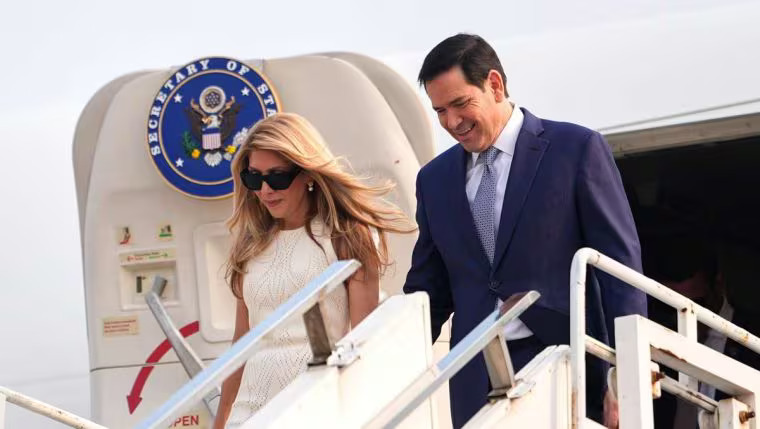
When US Secretary of State Marco Rubio arrived in India, the official agenda focused on trade, defence cooperation, energy security, and the Quad partnership. His visit included meetings with Prime Minister Narendra Modi and External Affairs Minister S. Jaishankar.
But behind the diplomatic language, one issue dominated the conversation: Russian oil. The United States has been encouraging India to reduce its dependence on Russian crude and diversify its energy imports. Washington believes American energy exports can become a major alternative for India in the coming years.
India listened carefully. But its response revealed something much bigger than an oil disagreement. It revealed how India now approaches global politics — with strategic independence at the center of its foreign policy.
Why America Wants India to Reduce Russian Oil Imports
Since the Russia-Ukraine conflict began, the United States and its Western allies have imposed heavy sanctions on Moscow. The aim was to weaken Russia economically by targeting its energy revenues.
At the same time, global energy markets have faced multiple disruptions:
Sanctions on Russia reduced supply stability
Tensions involving Iran affected Gulf energy routes
Venezuela’s oil production remained unstable under sanctions and political uncertainty
These developments created significant pressure on global oil markets. Prices rose sharply, increasing economic stress for oil-importing countries. In this situation, Washington has repeatedly encouraged countries, including India, to reduce purchases of Russian crude.
During his India visit, Rubio stated that the United States was prepared to expand energy exports to India and support the diversification of India’s energy supply chain.
For America, the issue is both economic and strategic:
Reduce Russia’s influence
Increase American energy exports
Strengthen long-term India-US energy cooperation
However, India views the issue from a very different perspective.
Why India Refused to Step Back
India’s decision is driven less by ideology and more by economics. India is one of the world’s largest energy consumers. For a country of over 1.4 billion people, oil prices directly affect:
Transportation costs
Inflation
Industrial growth
Food prices
Household expenses
After Western sanctions changed global oil pricing patterns, Russian crude became available at discounted rates. Indian refiners increased imports because the savings were substantial.
Before sanctions, India imported relatively limited quantities of Russian oil. But as discounts increased, Russian crude became financially attractive compared to many alternatives available in the international market.
For India, cheaper energy means:
Lower pressure on consumers
Better inflation control
Reduced import costs
Stronger economic stability
This is why India briefly reduced imports under international pressure but later continued purchases according to its own economic interests. From New Delhi’s perspective, paying significantly higher prices for energy simply to satisfy geopolitical expectations would place unnecessary pressure on the Indian economy.
The Bigger Geopolitical Shift
The disagreement over Russian oil reflects a larger transformation in global diplomacy. India today follows what many analysts describe as a policy of “strategic multi-alignment.” This means India works with multiple global powers simultaneously while protecting its own national interests.
For example:
India cooperates with the United States in the Indo-Pacific region
It remains connected with Russia in defence and energy sectors
It maintains strong ties with Gulf countries for energy security
It continues expanding economic relations with Europe and other global partners
Unlike the Cold War era, modern India is not trying to choose one geopolitical camp over another. Instead, it is building partnerships across different power centers while maintaining decision-making independence. This approach gives India greater flexibility in a rapidly changing global order.
Why the India-US Relationship Still Remains Strong
Despite disagreements over Russian oil, the India-US relationship continues to deepen. During the visit, Rubio also conveyed an invitation from President Donald Trump for Prime Minister Modi to visit the White House in the near future.This shows an important reality: The United States may disagree with India on certain issues, but it still views India as a critical strategic partner.
The reasons are clear:
India plays a major role in Indo-Pacific strategy
Both countries share concerns regarding China’s growing influence
Defence cooperation between the two nations continues to expand
Technology, trade, and supply-chain partnerships are becoming increasingly important
At the same time, India also values stronger ties with the United States. However, New Delhi has made it clear that partnership does not mean dependence. India is willing to cooperate globally — but it wants to make decisions based on its own national priorities.
Conclusion
Marco Rubio’s India visit was not simply about oil purchases. It highlighted a larger shift in international relations. India is no longer responding to global pressure from a position of weakness or dependence. It is increasingly negotiating from a position of economic and strategic confidence. The Russian oil debate demonstrated that modern Indian foreign policy is guided by practical interests rather than external pressure.
For the United States, India remains too important to ignore. For India, strategic autonomy remains too important to surrender. And that balance may define the future of India-US relations in the years ahead.
Key Takeaways
India continues purchasing Russian oil primarily for economic reasons
Rising global energy prices have increased pressure on oil-importing nations
India is pursuing a strategy of strategic independence and multi-alignment
Despite disagreements, India-US relations continue to strengthen
Energy security remains central to India’s economic policy
For Students
UPSC GS-II Relevance:
India-US Relations
India’s Foreign Policy
Strategic Autonomy
Energy Security
Debate Topic:
“Should economic interests take priority over geopolitical alliances in foreign policy?”
Published by:
ICL Research & Editorial Desk
ICL Vidyapeeth